
Nancy Clark does not speak the language of winding down.
At seventy-seven, she is still running a recovery center, managing a household full of senior dogs, supporting schoolchildren in Malawi, arguing with a husband whose politics and temperament oppose her own, and waking up each morning with a to-do list that would exhaust people decades younger. She does not present any of this as noble. She presents it as obvious.
“People are depending on me,” she told me over lunch. “Dogs need medication. That gets me out.”
With Nancy, this is not a slogan.
It shows up everywhere.
Nancy and her husband of more than twenty years, John, still debate which part of the house belongs to whose workspace, whose health issues are more pressing (John wins; he has cancer), and whether they should move; Nancy has very little interest in leaving Orange County.
His thinking, “Well, you can move your nonprofit anywhere.”
She fires back, “Really? I'm gonna have a fundraising birthday party in a town where nobody's known me for more than an hour and a half?”
She notes that her therapist taught her to use that expression: “Really?”
She finds it very useful in many conversations.
“Really?”
And then she just leaves it there.
Dressed in bold greens that flatter her auburn hair and a warm, genuine smile, she carries herself with the authority of someone who no longer waits for permission.
For Nancy, purpose is not something you search for. It's something you answer to.
But be forewarned: her purpose is not about comfort. It is about change.
For more than three decades, Nancy has built her life around people in transition: men and women coming out of custody, people in recovery, parolees who need structure before freedom swallows them whole. She is not sentimental about any of it. Her program has rules, rituals, standards, and consequences. Her men shave. They cook. They clean. They volunteer. They learn how to reenter the world not as invisible ex-offenders, but, in her words, as "walking, talking emissaries of recovery."
"Everybody knows if you're Nancy Clark's boys."
Nancy did not set out to build a recovery program.
At the time, she was, by her own description, "the most educated cocktail waitress in town"—fresh out of college, with a resume that didn't suggest leadership so much as persistence. When the public defender's office launched one of the country's first alternative sentencing programs, she applied anyway.
She wasn't the obvious choice.
She wasn't even the first choice.
But when the initial hire walked away—overwhelmed by the reality of the work—Nancy showed up the next morning and said, simply, "I think this is what I'm supposed to do."
What followed was not a carefully constructed plan. It was instinct.
“I didn't know what I didn't know,” she says. “If I had, I probably would have been terrified.”
“When you're doing something for the first time, you really don't have anybody who can train you. I had to kind of train the judges.”
She did. Nancy introduced herself and the concept of alternative sentencing to them one by one. The justices were gracious but did question the program.
“Nobody wanted these guys. They were all criminals,” she notes. “And here I am. Who am I? I'm nobody.”
She persisted. And over ten years, in the back of her mind, she was thinking she could put a program into her friend's apartment complex.
He was aghast, “You want me to fill an entire apartment complex with drug addicts and alcoholics?”
“No, that's who lives there now,” was Nancy's retort. “I'm gonna put people in recovery.”
Around 1990, she started with one apartment. Then another. Then another. Until, eventually, she had built something no one had quite envisioned—and no one else had stepped forward to try.
“Don't let people tell you what you can't do.”
Today, her Recovery Center has a contract with the Department of Corrections to work with parolees re-entering society. It is only men these days, though she has had various iterations working with women as well. She has had men who have been incarcerated for twenty-plus years, and one for forty-two years.
Nancy Clark has built a place where accountability becomes an act of care.

As we tour her nineteen-unit apartment complex located on a hillside in Costa Mesa, where the sea air freshens the sunlit grounds, she stops and calls out to a young, tattooed man, “Aren't you supposed to be in the meeting?”
He's caught. “Yes, 'am. I'm just running a little late.”
Nancy plants herself directly in front of him. “That's not acceptable. It's 1:07. You are to report on time. This is your priority.”
“Yes, m'am.”
“Get along now.” He scampers along in the appropriate direction.
She shakes her head. Her program is about giving them a second chance. She truly believes in them. But you can only fool her once; she catches on quick.
She invests in them deeply. But where some succeed, some don't. The wooden name plaques in the leaf-strewn one-room weight gym hold examples of both—mementos of a former time.
We stop off in a freshly renovated one-bedroom apartment. The soft moss-green walls and artwork in blue hues with splashes of orange offset the brown furniture we sit in and show the progress moving forward.
“My goal is for this to be a peaceful, safe oasis,” Nancy notes. One can even see the ocean from the street-side window.
I must confess my own personal connection to Nancy. I've now known her for close to nineteen years. My mother-in-law, the Honorable Margaret Anderson, and Nancy collaborated within the justice system for decades and became fast friends, to the point that Nancy's annual birthday celebration for Margaret grew larger and larger over the years.
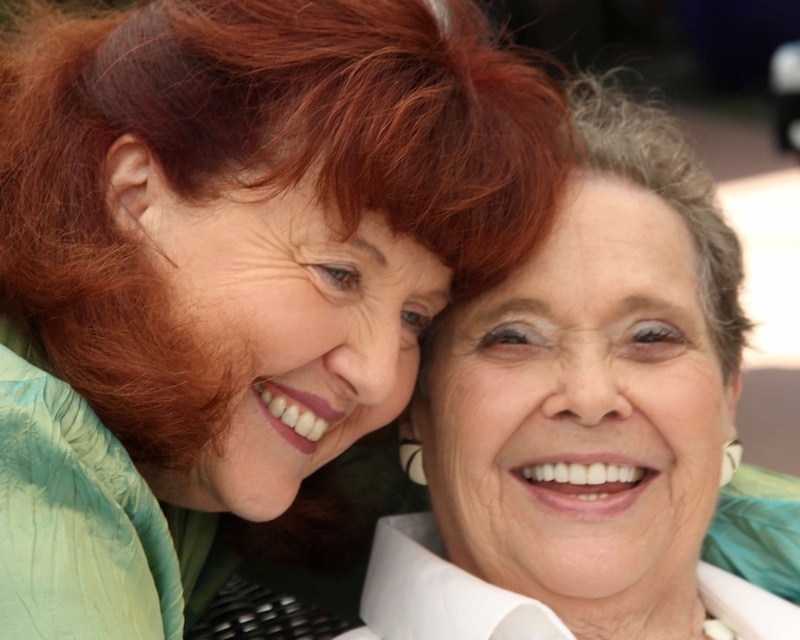
Margaret was especially fond of Nancy's husband, John, who often helped care for her, driving her over to Nancy's house or coming to her aid when she needed an extra hand. But Margaret's loyalty was always to Nancy.
When Nancy would vent about John, Margaret had simple advice: “Don't kill him, because you'll be in prison, and I'm not taking care of all your goddamn dogs.”
The friendship was built on exactly that kind of blunt affection.
But recently, my connection to Nancy has gotten even more personal. My half-brother, who is serving time in the USDB, has been accepted into her program, pending parole approval. We speak about how he would transition here, the daily schedule, and how much time he should expect to stay. Three months is her preferred minimum.
“The importance of it is willingness to change, commitment to change, and honesty with yourself.”
Nancy expresses confidence in my brother's attitude and readiness for reentry. She even questions whether we can do more for him.
Nancy is always looking for solutions—and more often than not, she finds them.
Later, as we exit the apartment, she spots one of her success stories, a soft-spoken, black gentleman who helped write the parole recommendation letter for my own brother, and numerous writs as well. She proudly notes that he leads her anger management classes, a clear turnaround from his own turbulent past. One would not guess that from his calm, put-together appearance and approach. It's a quick and efficient exchange.
Note, though, that Nancy's work doesn't stop at the edge of her Costa Mesa property. That same instinct to intervene, to build structure where there is none, has taken her far beyond Orange County.
It started in 2009, when Nancy traveled to Africa with friends involved in a nonprofit supporting schoolchildren. She returned year after year, eventually making the trip part of her life rather than simply a cause she supported from afar.
Then something unexpected happened. The organization began placing her on a waitlist for future trips.
Nancy was not interested in being sidelined.
"I realized this was something I had incorporated into my life and my expectations," she says. "It was becoming part of who I am."
She kept going, sometimes with the organization and sometimes on her own.
When the nonprofit ultimately closed during COVID, Nancy couldn't bear the thought of the students losing their support. One evening, she made a decision. By seven o'clock that night, she had started her own nonprofit and was moving forward.
Today, Nancy travels to Mangochi, Malawi, for about two weeks each year and has been doing so for roughly fifteen years.
This past year, she provided through her Warm Heart Education Foundation the school fees for fifty students, along with school supplies, modest basic sports equipment, including the ever-popular soccer balls, and period underwear for the female students, so they would no longer have to miss a week each month due to their period.
She also presented two career days for these same students at a local hotel, where they invited speakers from a variety of occupations to share their path to employment, including a teacher, nurse, welder, police officer, accountant, and psychologist.
The students tasted ice cream for the first time in their lives. Most did not even know the difference between strawberry and chocolate, but they were overjoyed to find out.
Particularly notable, they broke ground on a new trade school. While many of these students dream of college, the reality speaks differently. While they all say they want to be a doctor or lawyer, they have no understanding of such an undertaking. Instead, in Nancy’s vision, they will teach these kids a variety of skills, such as auto mechanics, computers, electricity, plumbing, painting, sewing, and beekeeping.
Nancy's fundraising efforts speak for themselves. “Without your help, they would have no opportunities.”
Nancy does not talk about slowing down. She talks about what's next.
Men to house.
Dogs to care for.
Students to fund.
“I don't know how people live their life without a purpose.”