According to some definitions, I've already retired. According to my heart, I'm just getting started.
There are essentially three different meanings of “retired,” and people often use them interchangeably. The Merriam-Webster definition is probably the oldest and broadest: “To retire is to stop working permanently.” This is the way I understood it as I grew up. Some version of “Here's your gold watch. Thank you for your service. You’re done now.”
But per a more modern, financial definition of retirement, the window is narrower. In essence, if you no longer depend on employment income because your living expenses are covered by savings, pensions, investments, or Social Security, then you're retired.
I hate that.
Neither of the above definitions captures a key element: identity and how one feels about oneself. That is where my discomfort comes from.
When most people hear, “I'm retired,” they unconsciously picture someone whose primary chapter of building and producing is over. They imagine leisure replacing ambition—a slower, mellow lifestyle pace that doesn't involve much risk or investment in time or effort. Whether that's fair or not, that's the cultural baggage the word carries.
That isn't what I'm doing.
In fact, who gets to tell us our productive years are over? If I leave a job that defined me for twenty or thirty years…who am I now?
I haven't stopped creating. I haven't stopped building. I haven't stopped taking risks. On the contrary, I'm intentionally redirecting my energies for the next couple of decades. If we “retire” at some age beyond sixty-plus, what are we to do with all that time? It could potentially be as long as the first part of our lives.
Our grandparents often retired because their bodies demanded it. In 1950, the U.S. life expectancy was about 68 years. Today, it's 79. But with the growing interest in longevity and new approaches to medicine, scientists and leaders are looking at how we can extend our health span and address a growing senior population, as noted in this TIME article.
“Right now, our maximum lifespan is 115, and about half of us die at around the age of 80,” geneticist Nir Barzilai says. “I don't know if we'll ever break the 115-year mark, but we should get decades more of life and good health.”
Our parents often retired because pensions made it possible. That is no longer the case. The pension has largely disappeared from private-sector employment, replaced by retirement accounts that we are expected to fund and manage ourselves. The Bureau of Labor Statistics reports that in 2025, only 14% of private-industry workers had access to a defined-benefit pension, versus 70% with access to defined-contribution plans such as 401(k)s.
Today, nearly three out of five Americans ages 60-64 are still in the labor force. In 2024, per the BLS, even among 65–69-year-olds, 33.4% were; among 70–74-year-olds, 19.6% were. And that is expected to grow. Labor-force participation among Americans ages 65–74 has risen from 15.9% in 1993 to 26.9% in 2023 and is projected to reach 30.4% by 2033. That means about one in three seniors will still be working. And producing.
Some because they want to. Some because they have to. AARP also found in 2024 that six out of ten older Americans worry they won't have enough money for retirement.
Does our old definition of “retirement” even make sense anymore? Maybe retirement isn't the end of work. Maybe it's just the end of obligatory work. Maybe the real problem is that we don't have a better word.
“Retired” comes from a time when people often worked until they couldn't, collected a pension, and gradually stepped away from public life. But many of us aren't stepping away from life at all. We're stepping away from one version of ourselves and trying on another. Some are launching businesses. Some are writing books. Some are consulting, mentoring, volunteering, creating art, traveling, or finally pursuing interests that spent decades waiting in line behind careers and obligations.
That doesn't feel like retirement to me.
That feels like reinvention.
What is the difference between a professional musician and someone who plays because they love it? Both work incredibly hard. One is doing it because it's a job. The other because it's a calling. And why can't it be both?
We saw the Scorpions in concert at Planet Hollywood in Vegas. Klaus Meine, their 78-year-old lead singer, has been dealing with recent health setbacks, including complex spine surgery, but there he was, center stage, singing his heart out.
When asked about retirement, Meine said, “We're getting older, sure—but we still love what we do, and as long as the fans are with us, we'll keep going.”
The way I see it, the second half of my life shouldn't be about shrinking or retreating. It should be about becoming more intentional.
Can I build something I'm proud to own for the next twenty years? Because if the answer is yes, then I'm building an asset instead of renting out my time.
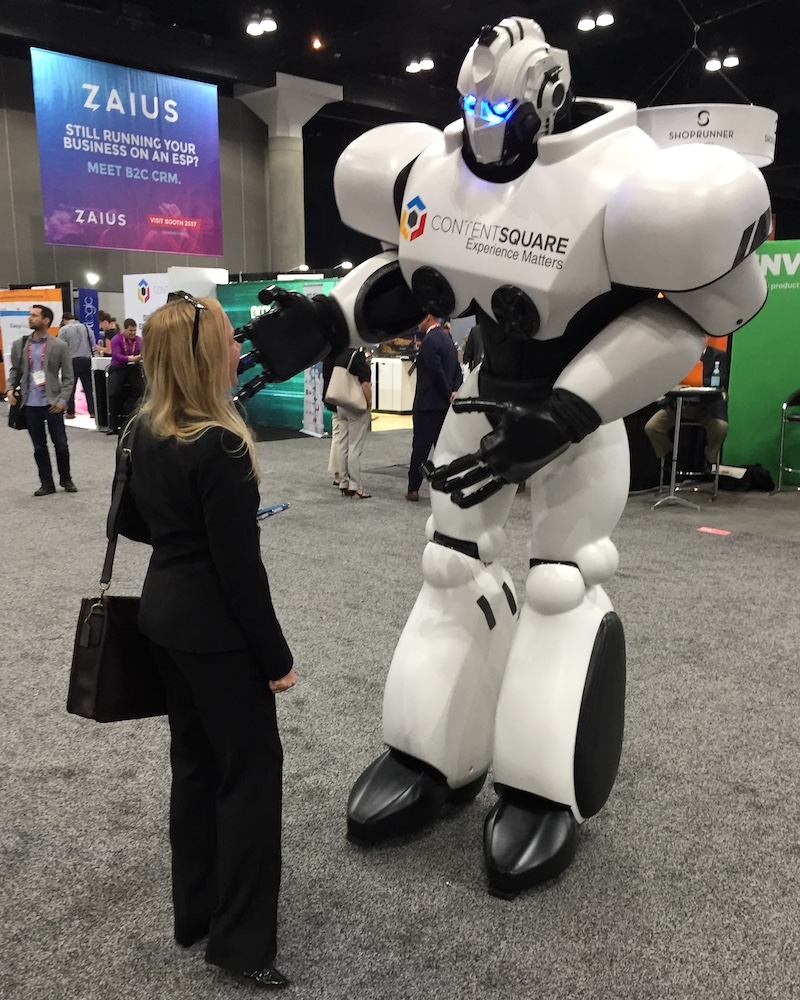
In the tech world, every hour I worked increased someone else's asset. But over the past six months, I stopped trying to force myself back into a tech career that no longer fit me. I was landing interviews—plenty of them. However, I was not closing the deal. At my title and experience level, these potential employers were seeking someone who was more technically oriented and, in some cases, someone who was vested in sales—not my favorite role.
I was the bridge between the client and the technical team. I would call myself a well-paid middle manager. The breaking point came after what I thought was a clear communication of my skill set, when I was asked to present a PowerPoint on a seven-page case study. It took me four days to prepare it—and thirty minutes into the presentation to know that it was an absolute failure.
The feedback I received was that I was too rehearsed, and they were seeking a technical architect who could whiteboard the solution on the fly with the client. Again, this was after three interviews where I explained my strengths and who I was. This was not it. It also brought into sharp focus that I needed a life change.
I was good at what I did, but I did not love it. It was a job, not a passion. It paid the bills.
For a long time, I assumed being the breadwinner of the family was enough. Most adults aren't expected to love their jobs. We're expected to be responsible, earn a living, support our families, and keep going. I did all of those things. There's honor in that. But somewhere along the way, I realized that if I was going to spend another twenty years building something, I wanted it to be something that excited me, not merely sustained me.
With Badass Biddy, every essay, every page, every improvement to the site, every chapter I write of my science fiction novel becomes something I continue to own. It's chosen work that I devote my time to. Whether it earns $100, $10,000, or much more over time, the work accumulates instead of disappearing with the next paycheck.
None of this means money suddenly stops mattering. Freedom has a price tag attached to it, and independence requires planning.
For me, this transition was carefully considered. I was not impulsive. This next phase for me has been plotted out for the next couple of years, with appropriate short-, medium-, and long-term goals. I budgeted and considered the family as a whole before announcing that I was moving toward the work I actually want.
I think society needs to reconsider how we measure worth. Why do we only count productivity when someone issues a paycheck? Raising a child is productive. Caring for aging parents is productive. Building community is productive. So are writing, creating, and learning. Each holds its own value to us as individuals and as part of a bigger whole, and not all valuable work is paid work. Whether it should be is another debate; in the interim, don't count someone out simply because they're not making what they used to.
Transition and growth come in many shapes and sizes.
I like being my own boss. A lot.
In fact, every job belongs to me here. I'm the founder and CEO. The creative director. The web developer. The copy editor. The marketer. Customer support.
I'm also a wife, mother of a soon-to-be thirteen-year-old son, and the logistics coordinator for a household of pets. My kid won't hit college for another seven years. While my peers are attending their children's weddings and welcoming their first grandkids, I have quite a while before all of that happens. And I'm happy with that. We are all just in different spaces and paces of our lives. There is no universal schedule for becoming who we're meant to be.
I still feel I have tremendous possibility ahead of me. I get to claim authorship of these next decades of my life. I get to write who I become and how I'll be remembered. Not what I have been. I believe I still have more to become.
Recently, I received an email from Salesforce about maintaining my Salesforce certifications. I have a year to do it. Funny thing, though: I could not delete that email.
Though I am adamant that I do not wish to return to that arena anymore, those Salesforce certifications aren't merely credentials for a field I no longer want to work in. They’re evidence of something I accomplished. I studied for them, passed the exams, maintained them, and built a decade-long career around the knowledge behind them. Clicking the trash can icon can feel weirdly like saying, “Well, none of that matters anymore.”
On the one hand, it doesn't. On the other hand, I'm not quite ready to throw away the evidence that I once earned them. There is something very symbolic about this email arriving right now. In essence, it’s asking me if I want to renew my old identity?
Nope.
But I don't have to destroy it, either.
So, I archived the email. I'll let the certifications lapse. Someday I'll stumble across it and think, Oh, yeah. I did that, too.
Because I did.
For too long, I let job titles, employers, certifications, and paychecks answer the question, “Who gets to decide when our story is over?”
Now I think the answer is simpler.
We do. We decide whether we're finished. We decide whether we're still curious. We decide whether we're still building.
And as long as that's true, I'm not finished. I'm just in the chapter where I finally get to decide what happens next.
Today, I have new fields to forge.
I'm still writing my story.